

Buying a wine estate: 5 mistakes to avoid for a successful acquisition project
Summarise this article with :


Buying a wine estate is often the project of a lifetime. It is a long-term undertaking that evolves over time, reshapes your daily life, and often involves those close to you. Whether you are already part of the wine industry, considering a career change, or investing, becoming a winemaker profoundly transforms both your personal and professional life. It is a passion-driven decision—one that must nevertheless be guided by reason.
With over 13 years of experience supporting wine estate transactions in the Loire Valley, Ampelio regularly observes recurring mistakes that can weaken or even jeopardize the acquisition of a wine estate:
- buying without professional support;
- misunderstanding the reality of the winemaker’s profession;
- underestimating the overall budget;
- failing to anticipate timelines and key steps;
- lacking flexibility in defining the project.
At Ampelio, we are committed to supporting sustainable vineyard projects that contribute to the long-term viability of wine estates and actively foster the dynamism of our wine region.
In this article, we break down these five common “mistakes” and explain how to avoid them, so you can secure your project, gain peace of mind, and lay the foundations for a sustainable, coherent operation aligned with your ambitions.
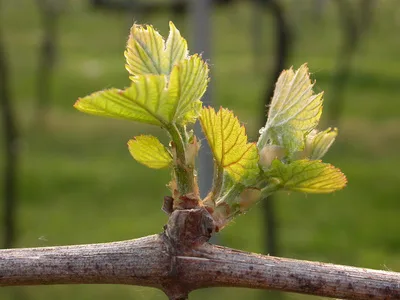
Buying a vineyard without professional guidance
When acquiring a wine estate, surrounding yourself with the right professionals is essential to ensure a smooth process and the overall success of your project. Yet many buyers still underestimate the complexity of such a transaction and choose to proceed alone at the risk of jeopardizing their long-term establishment.
The first step—and often the longest and most complex is identifying the right wine estate. One that aligns with your project, your experience, your financial capacity, and your medium and long-term objectives.
This is precisely where a wine estate transaction expert like Ampelio comes in. We support buyers from the very early stages, starting with defining their project. We present genuinely relevant opportunities, carry out targeted sourcing, and select estates that are fully aligned with both your profile and the Loire Valley wine market.
We also manage ongoing discussions with sellers, lead negotiations, and coordinate all stakeholders involved in the acquisition process.
Key Professionals Involved in Your Wine Estate Acquisition
Purchasing a wine estate involves several experts whose roles are complementary:
The Chartered Accountant
They support you in building a realistic business plan, aligned with your experience, the estate, your budget, and your personal contribution. This step is fundamental to securing your project and gaining the trust of financial partners.
The Broker
Working closely with the accountant, the broker helps present your project to banks and secure appropriate financing terms. As acquiring a wine estate represents a significant investment, optimizing financing is a major strategic lever.
The Notary and/or Lawyer
These professionals are essential to ensure the legal security of the transaction. They are involved in drafting preliminary agreements and the final deed of sale, advising on administrative procedures, and supporting the creation or structuring of wine businesses.
To explore this topic further, we invite you to read our dedicated article on advisors involved in wine estate transfers.
Please note that these experts will remain key advisors throughout the entire lifecycle of your wine business.

Ignoring the Reality of the Winemaker’s Profession
Being a winemaker is not just about working in the vineyard, producing wine, or selling it.
Of course, viticulture and winemaking are fundamental skills, but they represent only part of the expertise required to successfully run a wine estate. Too often, this reality is underestimated when acquiring a wine estate.
Essential Skills and Qualifications
Nowadays, a winegrower is first and foremost a business manager, required to master a wide range of skills. Here are the six essential qualifications:

- Viticulture: understanding your vineyards and terroirs; observing, analyzing, anticipating, and working in harmony with nature’s rhythm. Knowing when to prune, when to treat, and when to harvest.
- Winemaking: producing high-quality wines that faithfully reflect their terroirs, while mastering the art of vinification and maintaining technical balance throughout the process.
- Operations and Technical Management: understanding, maintaining, and optimizing the estate’s equipment, machinery, and buildings.
- Sales and Marketing: knowing how to sell your wines, communicate about your work, and build and retain a loyal customer base, both in domestic and export markets.
- Finance and Administration: mastering the fundamentals of accounting, taxation, rural law, and regulatory compliance.
- Management: recruiting, supervising, and organizing the work of employees and seasonal staff, structuring roles, and managing working time effectively.
The Daily Life of a Winemaker
Beyond these skills, it is essential to understand the day-to-day reality of the profession. In viticulture, it is the vine and nature that dictate the calendar and working hours.
Having rest periods when the vines are dormant, working day and night during harvest, getting up in the middle of the night to protect vineyards from frost, working weekends when involved in direct sales, or even not sharing the same holidays as the rest of the family these are all integral parts of the job.
Being a winemaker is a passion-driven profession, but it is also a commitment that profoundly impacts both your daily life and that of your loved ones. Understanding this reality from the outset is essential to building a sustainable and well-balanced wine project.
To go futher: https://ampelio.fr/dossier/le-vigneron-est-il-un-chef-dentreprise-comme-les-autres/
Underestimating the overall budget
The cost of acquiring a wine estate is one of the most obvious questions—yet also one of the most complex to answer. Each estate is unique in terms of location, size, appellations, buildings, production facilities, and economic potential, all of which are closely tied to the level of investment required.
In the Loire Valley, Ampelio generally observes price ranges between €500,000 and €3 million. Of course, this estimate may vary significantly depending on the specific characteristics of the estate and its geographical location.
To better understand vineyard prices in France, we invite you to read our dedicated article: https://ampelio.fr/dossier/prix-des-vignes-en-france-ce-quil-faut-savoir/
What is included in the price of a wine estate
The acquisition cost is only one component of the overall budget.
The prices we communicate typically correspond to the value of the estate’s assets, including:
- the vineyards and land;
- operational and residential buildings;
- equipment and winery facilities;
- the brand and customer base.
Ampelio’s fees are included in these amounts. However, prices generally exclude inventory and crop advances, as these vary depending on the stage of the estate’s operational cycle.
Costs often underestimated by buyers
Inventory (Wines, Dry Goods)
The valuation of inventory can vary significantly depending on volumes, vintages, and the buyer’s acquisition strategy. Buyers may choose to take over none, part, or all of the inventory, while sellers also have their own expectations on this matter.
Read our dedicated article: https://ampelio.fr/dossier/juin-2024-la-reprise-des-stocks-lors-dune-transmission-de-domaine-viticole/
Crop Advances
Crop advances correspond to all work carried out in the vineyard for the upcoming harvest (pruning, treatments, labor, mechanical work, etc.). Their amount depends directly on the timing of the acquisition and must be anticipated from the very beginning.
Read our dedicated article: https://ampelio.fr/dossier/reprise-de-domaine-viticole-tout-savoir-sur-les-avances-aux-cultures/
Advisors’ Fees
The experts mentioned earlier (chartered accountant, broker, notary, lawyer, wine estate transaction specialist, etc.) represent an essential investment—and therefore a cost. Their support is not only crucial during the acquisition phase, but also throughout the first years of operating the estate.

Post-acquisition investments to anticipate
Buying a wine estate almost always involves additional investments, which are necessary to ensure a successful setup and long-term viability:
- creation of the brand and estate identity;
- building renovation or improvement works;
- purchase, renewal, or compliance upgrades of equipment;
- salaries for employees and seasonal workers;
- vineyard investments (grubbing up, replanting, restructuring);
- personal relocation costs (moving to the region or onto the estate);
- etc.
Anticipating all these cost items is essential to ensure your acquisition aligns with your true budget range, rather than simply the listed purchase price of the estate.
Depending on your profile, age, and project, you may also be eligible for financial support from the State or regional authorities.
In this context, the chartered accountant plays a key role in building a comprehensive and accurate financial forecast, taking into account your personal contribution and financing capacity.

Ignoring timelines and key steps in a wine estate acquisition
When acquiring a wine estate, buyers often underestimate both the time required and the rigor of the process. It involves a regulatory timeline sometimes non-negotiable as well as substantial preparatory work that must be carried out well in advance.
A structured timeline with key milestones
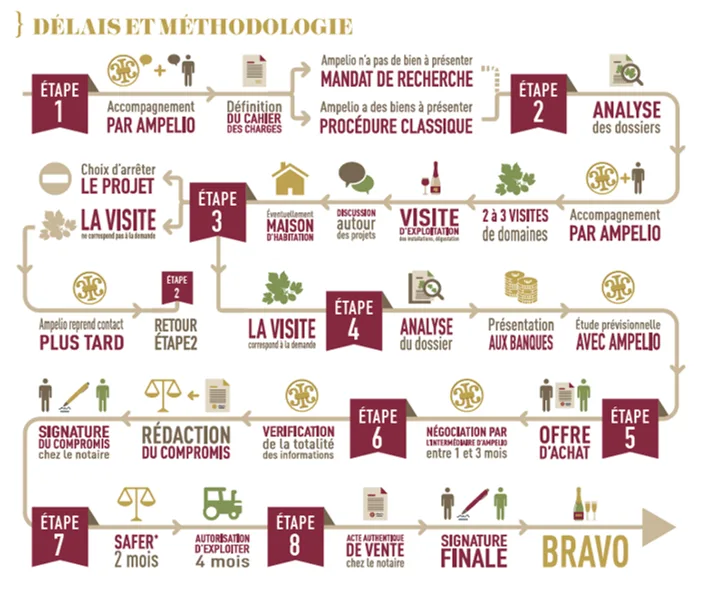
While some phases may vary depending on the project, others are strictly regulated. The main steps involved in a wine estate acquisition typically include:
- defining the acquisition project;
- searching for a suitable wine estate (sourcing, reviewing dossiers, site visits);
- preparing the business plan;
- defining the scope of the acquisition;
- negotiating with the seller;
- submitting and validating the offer to purchase;
- drafting the preliminary sale agreement (SPA / compromise de vente);
- negotiating inventory and crop advances;
- SAFER pre-emption rights (2-month statutory period);
- securing bank financing (typically 3 to 6 months);
- obtaining the farming authorization (approximately 4 months);
- final signing (completion);
- gradual takeover of the estate, often supported by the seller.
Providing a standardized overall timeline is therefore difficult. The search phase alone can take anywhere from one month to several years, particularly as projects may evolve over time. However, once the offer to purchase has been signed, it generally takes at least six months before the effective takeover of the estate.
Preparation work to anticipate before signing
Beyond the timeline, taking over a wine estate requires significant preparatory work—often underestimated by buyers. Depending on your background, particularly in the case of a career change, a training period may be necessary. It is also essential to plan for numerous meetings with your chartered accountant, broker, and other advisors.
Preparing the business plan is a central step. This document forms the true backbone of the project: it determines bank approval, secures the acquisition, and serves as a roadmap for the first years of operation. It must be robust, realistic, and aligned with your budget, your experience, and the characteristics of the estate.
That said, it is important to strike the right balance. The winemaking profession inherently involves uncertainty: a poor climatic year can significantly impact yields, while a strong vintage can generate higher volumes and increased inventory. While prudence is essential, an overly conservative business plan can tie up excessive capital, restrict the overall budget, and hinder bank approval.
Some acquisitions fail simply because buyers were not sufficiently prepared for the realities of the acquisition process.
Being well prepared means giving yourself the best chance of success—and approaching your new venture with confidence, structure, and clarity.
Failing to adapt your search and acquisition project
The perfect wine estate does not exist.
Every buyer approaches the market with a clear vision of their “ideal” estate: a specific type of vineyard, functional buildings, a strategic location, an efficient commercial setup, immediate profitability—all perfectly aligned with a defined budget.
In reality, the market often tells a different story. Opportunities for wine estates for sale do not always match buyers’ expectations or timelines. The market requires adjustments, compromises, and a level of adaptability that is essential to the success of any acquisition project.
In the transactions we support, even when there is a strong emotional connection, there are always elements that need to be reconsidered or anticipated: a vineyard that does not fully match the desired practices, grape varieties different from those initially envisioned, buildings requiring renovation, equipment to be renewed, a commercial strategy to be rethought based on your skills, or profitability that develops progressively over time.
The objective, therefore, is not to find the “perfect” estate, but the one that is consistent with your background, your resources, and your ambitions. A successful wine project relies on a dual capacity for adaptation: the estate must be able to evolve with you, and you must be ready to adapt to its constraints and potential.
The human dimension: often underestimated
Buying a wine estate is also a deeply human journey. Throughout the acquisition process, you engage with the seller—their story, their experience, and the relationship they have built with their estate. While the goal is always to ensure a smooth transfer, human relationships cannot be forced.
It is essential that each party understands their role and respects the other: respect for the seller’s history and the work accomplished, as well as respect for the new chapter the buyer is about to write. A successful transfer often depends on a healthy, transparent, and balanced relationship.
At Ampelio, we support you in structuring your project, refining your search, and identifying estates that genuinely match your profile. We advise you on strategic decisions, the necessary trade-offs, and the most relevant sourcing opportunities. We carefully select coherent estates and ensure we work with sellers who are respectful, open to transmission, and supportive of their estate’s future evolution.
Our role is also to lead discussions and negotiations with both rigor and care, in the interest of both seller and buyer, ensuring that the acquisition takes place under the best possible conditions and lays the groundwork for a sustainable and successful project.
Conclusion
Buying a wine estate and becoming a winemaker is a demanding, engaging, and deeply human journey. Through these five mistakes to avoid, our objective is not to discourage project holders, but rather to highlight key points of attention and share the on-the-ground reality as we have observed it since 2012, working alongside both buyers and sellers of wine estates in the Loire Valley.
At Ampelio, we believe that passion is the driving force behind every project. However, to sustain that passion over time, it must be combined with method, thoughtful analysis, and sound judgment. This is the very purpose of our support: to secure each stage of the wine estate acquisition process, bring clarity to decision-making, and build solid, tailored projects alongside our clients.
Because a well-supported wine project is one that stands the test of time—for the benefit of winemakers, estates, and the vitality of our wine region.

At Ampelio, our mission is to create the right match between a wine estate and its future owner. We place people at the very heart of our work.
In every transfer, our main concern is ensuring that the association is lasting, sustainable, and balanced — so that each party can thrive and find value in the project. The economic future of the wine estate is also a key element we take into account.
We actively support these transitions and dedicate all our expertise to serving each project.
Do you have a question about selling or buying a wine estate?
Our team will be delighted to discuss your project with you and answer all your questions.
Ampelio brings over 10 years of experience in supporting and advising on wine estate transactions in the Loire Valley.