

Sale of a wine estate: 5 common mistakes to avoid for a successful transaction
Summarise this article with :


Selling a wine estate often means turning the page on a lifetime of work—a project built over many years. It is a decision that may be chosen or imposed (retirement, no family successor, or economic challenges).
In all cases, however, a sale cannot be improvised. It requires careful thought, anticipation, and the right support.
In a challenging economic environment, where buyers are increasingly demanding, it is essential to approach the transaction with method and clarity. Being well surrounded, properly advised, and avoiding common pitfalls can make all the difference.
At Ampelio, with over 14 years of experience in wine estate transfers, we have identified five recurring mistakes that slow down or even block many sales:
- anticipating the sale too late,
- selling without professional support,
- neglecting communication with your ecosystem,
- underestimating legal and tax considerations,
- and searching for the “perfect” buyer.
In this article, we explain why these are mistakes and, more importantly, how to avoid them to ensure a smoother and more successful sale of your wine estate.
Anticipating your sale too late
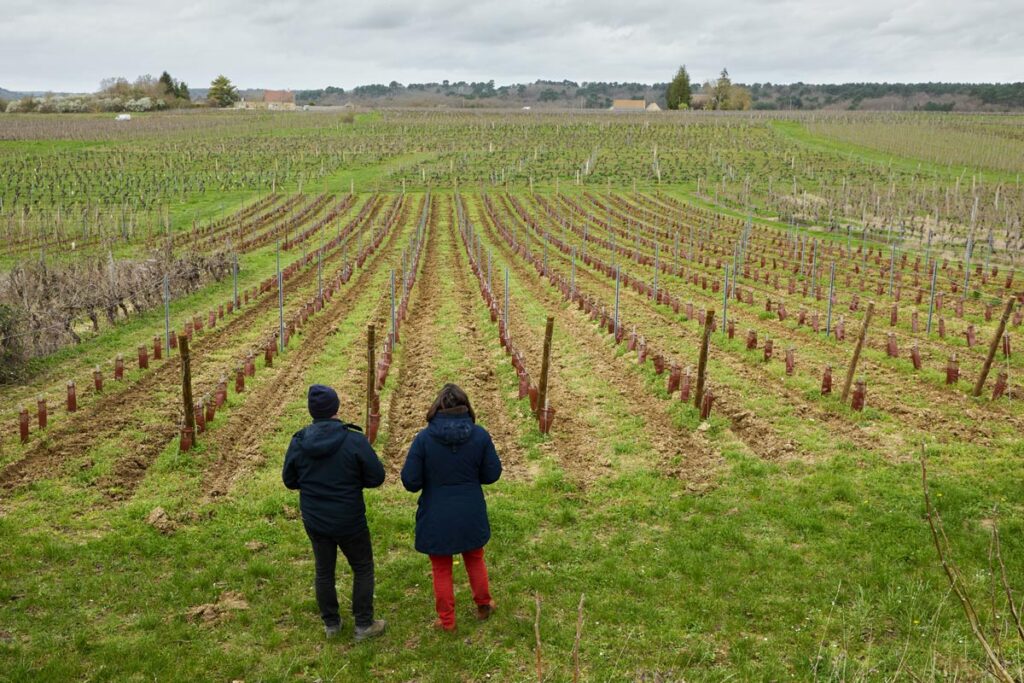
As mentioned in the introduction, selling a wine estate is a major decision, often emotionally charged. It requires perspective, thorough preparation, and above all, time. Too many winegrowers begin this process when they are already under pressure: physically exhausted or facing urgency (imminent retirement, health issues, economic difficulties). Yet, a successful sale is built well in advance.
Anticipating means first carrying out a comprehensive assessment of your business: legal structure, financial health, and the estate’s strengths and weaknesses. It also involves preparing yourself mentally for the transition accepting to hand over, thinking about how you want to step away from the estate, and defining your potential role in supporting the business after the sale, if you wish.
Next, it is important to have a clear view of the timeline and the key stages of the sale:
- Carrying out a valuation of the estate (with Ampelio or a specialized land expert)
- Agreeing on the scope of the sale and the transfer price
- Identifying and searching for a buyer
This is followed by the negotiation phases. Sometimes, these discussions do not lead to an agreement, and the search for a new buyer must begin again.
If, on the other hand, an agreement is reached, the legal stages follow: drafting the preliminary agreement, pre-emption rights, obtaining farming authorizations, bank approval, and finally, signing the final deed.
There is no standard timeline. On average, a sale takes between 18 and 24 months. Some are completed in 6 months, while others can take up to 6 years. Every project is unique.
This is why it is essential to start thinking about your sale well ahead of your desired timeline. Anticipation gives you the best chance to sell under the right conditions, at the right time, and in alignment with your personal plans.
To go further:
- Anticipating the sale of a wine estate: a necessity
- Timeline for taking over a wine estate
Selling without support
Selling is a complex process, at the crossroads of legal, financial, technical, and human considerations. It requires a wide range of expertise: knowledge of the wine industry, wealth strategy, taxation, negotiation, interpersonal skills… all areas in which it is difficult to be an expert alone.
This is why it is essential to surround yourself with professionals: a wine transaction expert, chartered accountant, lawyer, and notary. Their experience and know-how are invaluable in securing the transaction from both a legal and tax perspective. Beyond these key players, it is crucial to rely on a trusted partner who will stand by your side at every stage.
Effective support means:
- A fair and accurate valuation of your estate
- Connecting you with serious and qualified buyers
- Ongoing management of the sale process and exchanges between parties
- And above all, active listening, sound advice, and human support
Selling also involves moments of doubt and reflection. It is essential to have a dedicated contact who understands you, represents you, and defends your interests—someone who can also remain by your side after the sale, if needed.
At Ampelio, we are committed to combining professional rigor with a human approach. Our core values are listening, expertise, trust, and precision—delivered with professionalism and passion. These values are at the heart of every project we support.
To learn more: Our values at Ampelio
Neglecting communication with your ecosystem
Selling a wine estate also means passing on a story and a network of human relationships. This requires carefully managing communication around the sale, taking into account what we call the winegrower’s ecosystem.
This ecosystem includes:
- your team and employees
- your clients, both professional and private
- your suppliers and technical partners
- your advisors (chartered accountant, notary, lawyer, etc.)
- and of course, your family and close circle
It is important to remember that you alone decide who to inform and when. Confidentiality is sometimes necessary, especially at the beginning of the process, but isolation is never beneficial. A well-managed sale is also one that is well supported and appropriately shared.
Why communicate?
Your professional advisors can adapt their work to your project and help structure the business for the sale.
Your family and loved ones provide invaluable moral support. They know you better than anyone and can offer a listening ear.
Your employees, once informed at the right time, will appreciate a transparent approach. This helps avoid rumors, strengthens trust, and facilitates the transition with the buyer.
Your loyal clients will feel even more connected to the estate if they understand that continuity is ensured. Introducing the new owner and explaining the transition are key elements in strengthening the commercial relationship.
Your suppliers also play a crucial role. Introducing them to your buyer helps preserve working conditions and the estate’s reputation.
Of course, this does not mean revealing everything from the outset or compromising confidentiality. However, moving forward in a climate of trust, controlled transparency, and progressive communication gives you the best chance of achieving a smooth, respectful, and sustainable transaction.

Underestimating legal and tax considerations
Legal and tax aspects play a central role before, during, and after the sale. Poor anticipation or a lack of understanding of these issues can lead to significant consequences: delays, renegotiations, or financial losses.
Before the sale: preparing the legal and tax framework
The first step is to structure the business from both a legal and tax perspective in advance. Your advisors (notary, lawyer, chartered accountant) can support you in choosing the most appropriate legal structure and anticipating the tax implications of the transaction.
During the sale: managing obligations and securing each stage
The sale of a wine estate does not concern the vineyards alone. It also involves:
- lease agreements
- professional buildings, and sometimes private property
- vineyard and winemaking equipment
- wine stock and crop advances
- ongoing contracts
- the brand and customer database
Each of these elements may be subject to negotiation and specific clauses within the sale agreement.
In addition, the sale process is lengthy and includes a number of mandatory steps (pre-emption rights, farming authorizations, bank approval, etc.). Understanding these stages allows you to plan your transaction timeline effectively.
After the sale: anticipating tax and estate implications
Once the sale is completed, capital gains taxation becomes a key consideration. The amount will depend on the type of transaction (asset sale or share sale), the tax regime of the business, and the options chosen. Your advisors will be able to guide you toward available tax relief schemes—provided these elements have been prepared in advance.
It is also important to consider the impact on your personal assets: inheritance, gifting, reinvestment, family transfer… all topics that should be addressed with expert guidance.

Searching for the “perfect” buyer
It is not uncommon for the winegrowers who contact us to have a clear picture of the ideal buyer: a passionate young couple, from the industry, who has fallen in love with the estate, with solid financial backing—and, of course, very personable.
This type of profile does exist, and when it does, we do everything we can to make the project succeed. However, the reality of the market is more complex: each buyer comes with their own story, expectations, constraints, and vision. Every project is unique.
At Ampelio, our role is precisely to gain an in-depth understanding of these profiles—to identify their motivations, financial capacity, and ambitions. This allows us to create relevant and responsible matches.
However, it is possible that the potential buyer:
- does not share your vision for the estate
- wishes to transform the property or the wines
- lacks sufficient financial resources
- or that your respective timelines and projects do not immediately align
This is where mental preparation for the sale becomes essential. Selling also means accepting that the estate will enter a new chapter in its history, led by others. It involves letting go of one era while placing trust in the future.
Of course, this does not mean selling to just anyone. At Ampelio, we ensure the reliability of the profiles we present. We will never introduce a buyer we do not trust or whose project we consider unviable. Our role is to guarantee the seriousness of the buyer and to act as the spokesperson for your legacy.
We are here to defend your story, but also to support the buyer in their installation. Acting as the interface between both parties is at the heart of our work: ensuring that the transition takes place with respect, understanding, and efficiency.
In today’s environment, being open-minded, flexible, and able to prioritize effectively is essential. The “perfect” buyer may not exist… but the right buyer certainly does.
Conclusion
Avoiding these common mistakes gives you a better chance of successfully selling your estate: greater peace of mind, fewer obstacles, and structured support at every stage. That said, it does not mean the sale will be quick or linear.
Every transaction is unique. Each one carries its own story, a human journey, and its share of twists and turns. The right buyer may take time to emerge, negotiations may evolve, and unexpected challenges may arise.
This is precisely why Ampelio exists: to support winegrowers with rigor, care, and realism throughout this demanding process. Our role is to connect the right people, bring clarity, defend your interests, and support you in passing on your legacy.
To better understand what a transfer truly represents, we invite you to discover an inspiring story: the journey of a young winegrower supported by Ampelio. A concrete, human story, full of meaning.
Read the article

At Ampelio, our mission is to create the right match between a wine estate and its future owner. We place people at the very heart of our work.
In every transfer, our main concern is ensuring that the association is lasting, sustainable, and balanced — so that each party can thrive and find value in the project. The economic future of the wine estate is also a key element we take into account.
We actively support these transitions and dedicate all our expertise to serving each project.
Do you have a question about selling or buying a wine estate?
Our team will be delighted to discuss your project with you and answer all your questions.
Ampelio brings over 10 years of experience in supporting and advising on wine estate transactions in the Loire Valley.