

When is the right time to transfer your wine estate?
Table of contents
- The first signs often appear long before the official decision
- What changes when you stop planning for the estate’s long-term future
- Waiting too long often makes the transfer more difficult
- Selling a wine estate is about more than transferring assets
- Conclusion: the most successful estate transfers are usually the best prepared
Summarise this article with :


There is rarely a single defining moment when a winegrower suddenly decides to transfer their wine estate.
Instead, the thought develops gradually, often through a series of subtle signs:
- Postponing an investment for yet another year.
- Replanting a vineyard parcel without real conviction.
- Finding that strategic decisions feel more difficult than they used to.
- Or simply struggling to picture where the estate will be in five or ten years’ time.
In the wine industry, the smoothest estate transfers rarely begin with putting a property on the market. They start much earlier, with a period of reflection and questioning that many owners initially keep to themselves.
Ampelio is here to listen to winegrowers. We often hold informal conversations several years before any decision is made. These discussions provide an opportunity to answer the many questions that arise, ease the pressure surrounding the decision to step back and transfer a wine estate, and lay the foundations for a structured, well-informed reflection.
Transferring a wine estate is not simply a matter of managing a financial or property transaction. It is also about deciding what you want to preserve, pass on or see evolve after you step away: a winemaking style, a commercial reputation, a family legacy, or even a particular vision of the profession. It also often means leaving behind a place that has been at the heart of your working life.
The question is therefore not simply, “When should I sell?”
It gradually becomes, “How do you know when the time is right to sell?”
The transfer of a wine estate is often presented as a structured, highly technical process involving the valuation of the estate, the search for a buyer, negotiations, and the legal and tax arrangements.
On paper, the process seems straightforward.
In reality, however, the decision to transfer a wine estate is rarely driven solely by technical or financial considerations. More often, it forms part of a broader reflection: the moment when a winegrower chooses to hand over the reins and begin a new chapter in the estate’s history.
After all, a wine estate is unlike any other business. It is often the result of generations of dedication, hard work and decisions that have shaped its identity.

The first signs often appear long before the official decision
In many cases, the first indication is a form of decision fatigue. Not just physical exhaustion, but mental fatigue. In recent years, the profession has become significantly more complex, with climate-related challenges, changing consumer habits, rising production costs, increasing environmental expectations, more demanding regulations and growing pressure on profitability.
At a certain point, some winegrowers stop asking themselves how to further develop their estate and instead begin wondering how much longer they want to carry these responsibilities.
This shift is rarely expressed so openly. Yet it often marks the true starting point of the reflection that ultimately leads to the transfer of a wine estate.
Recognising when one chapter is coming to an end
The decision to transfer a wine estate often comes when winegrowers feel that they have reached the end of a chapter.
This can happen in a variety of situations, such as:
- Approaching retirement;
- Accepting that there will be no family successor;
- Wanting to pursue new personal or professional projects;
- Wishing to plan ahead for the future of the estate.
In many cases, this reflection unfolds over several years. Some owners begin considering the transfer long before they formally launch the process.
Planning ahead in this way allows the estate to be prepared properly and the handover to be approached with greater peace of mind.
It is therefore necessary to consider finding partners to provide support and to gather all the documents required to set out the framework for a sale.
What changes when you stop planning for the estate’s long-term future
Another common sign is the growing difficulty of imagining where the estate will be in ten years’ time.
Long-term thinking is fundamental in viticulture. Most strategic decisions only deliver results over several years, whether it involves vineyard removal and replanting, technical investments, commercial diversification or environmental transition.
When an owner begins focusing solely on the short term, the way the estate is managed inevitably starts to change.
Investments become more cautious. Certain decisions are postponed. Development projects lose momentum. Key recruitment plans are put on hold.
The issue is not necessarily one of age. Some winegrowers begin preparing the transfer of their estate in their fifties, while others remain fully committed and enthusiastic well into their sixties.
The real question often lies elsewhere: is there still a genuine desire to lead the estate through its next phase of development?
One of the questions that often comes up during Ampelio’s initial conversations with winegrowers is: “Should I go through with the next harvest?” The answer is often, “Yes and probably the one after that as well.”
It is when that answer becomes uncertain or difficult that planning ahead truly becomes essential.
Waiting too long often makes the transfer more difficult
The paradox is a common one: some owners want to transfer their estate at the “perfect moment“, only to begin the process when fatigue, financial pressures or family circumstances have already reduced their room for manoeuvre.
In these situations, negotiations tend to become more challenging not because the estate has lost its intrinsic value, but because there is far less time available to prepare the transfer properly.
By contrast, the estates that attract the greatest interest are often those whose owners have planned well in advance. Prospective buyers quickly recognise the difference: a trusted second-in-command is already in place, the accounts are well organised, land ownership is clearly documented, investments have been made consistently, and the commercial strategy is easy to understand.
Preparing for a transfer does not mean you are ready to leave immediately. It simply means preserving your ability to choose the right moment.
Selling a wine estate is about more than transferring assets
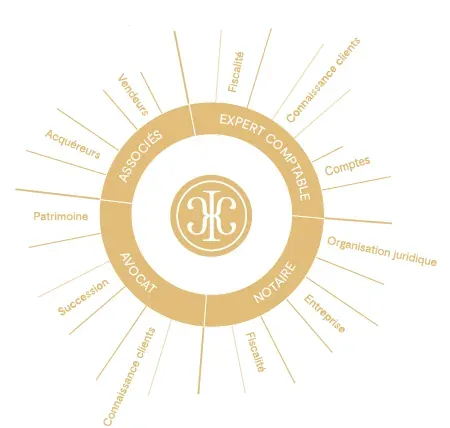
The transfer of a wine estate is a complex process that requires expertise across a range of disciplines, including legal, tax, financial and strategic matters.
Specialist support can help to:
- Structure the transfer project;
- Assess the estate in line with current market conditions;
- Identify the most suitable buyers;
- Secure every stage of the transaction.
Beyond these technical aspects, working with experienced advisers also provides an independent perspective, helping owners clarify their priorities and make informed decisions.
In practice, the most challenging issues are rarely the ones owners anticipate at the outset. One of the most common misconceptions is underestimating how long the transfer process actually takes.
Between the initial reflections, structuring the project, valuing the estate, preparing the necessary documentation, discussions with prospective buyers and the final negotiations, the process can sometimes take several years.
The complexity also stems from the very nature of wine estates.
Land ownership may be spread across several legal entities. Some vineyard parcels may belong to different family members. Production facilities, inventory, trademarks or trading companies are often held through separate structures that have been built up over decades.
On top of this come tax considerations, family dynamics and the need for strict confidentiality.
In the wine sector, a poorly managed sale process can quickly give rise to local speculation, creating uncertainty among employees, raising concerns for customers, prompting questions from banking partners or attracting attention from neighbouring winegrowers.
Maintaining confidentiality throughout the process therefore becomes a strategic priority in its own right.
Conclusion: the most successful estate transfers are usually the best prepared
The most successful transactions are not necessarily those that achieve the highest valuations.
More often, they are the ones where the owner has allowed enough time and perspective to plan the next steps methodically.
Planning ahead first helps strengthen the estate’s economic profile. A well-structured business, with clear financial performance and a coherent long-term outlook, inspires greater confidence among serious buyers.
It also makes it possible to complete genuinely strategic investments before the transfer, rather than leaving important decisions for the future owner.
Finally, it gives sellers the freedom to choose the right buyer instead of accepting the first viable option because time has run out.
In the wine industry, this freedom of choice can make a profound difference to the quality of an estate transfer.
Ultimately, transferring a vineyard is not simply about planning an exit. It is about deciding the conditions under which the estate will continue to grow and write the next chapter of its story.

At Ampelio, our mission is to create the right match between a wine estate and its future owner. We place people at the very heart of our work.
In every transfer, our main concern is ensuring that the association is lasting, sustainable, and balanced — so that each party can thrive and find value in the project. The economic future of the wine estate is also a key element we take into account.
We actively support these transitions and dedicate all our expertise to serving each project.
Do you have a question about selling or buying a wine estate?
Our team will be delighted to discuss your project with you and answer all your questions.
Ampelio brings over 10 years of experience in supporting and advising on wine estate transactions in the Loire Valley.